
Why Stress & Shoulder Tension Keep Returning | Chatswood Chiropractor
Why Stress & Shoulder Tension Keeps Returning
If you feel wound up everywhere at once — shoulders locked, neck sore, never quite able to switch off — that's what a lot of our Chatswood patients describe as "falling apart syndrome." They feel as though they are doing just that - falling apart. It's not a diagnosis, and it's not imaginary. Stress can change your body’s physiology, increasing inflammation, leading to an increase in muscle activity, disturbed sleep and heighten pain sensitivity, and those three things feed each other. A useful plan usually needs to address physical load, movement, recovery and stress together, while still screening for local injury or other causes.
Why stress lands in the shoulders
Under pressure, most people brace without noticing: the jaw tightens, breathing gets shallower, shoulders lift, and muscles stay "on." Short bursts of this are normal. The problem is in today’s society, stress rarely occurs in short bursts. With work pressure, poor sleep, economic changes, ultra processed foods, worry about kids and family, and long static postures stress becomes chronic and continuous. Our sympathetic nervous systems are switched on for hours or days at a time — that's usually the point where it starts to feel like everything is tightening up together, not just one spot.
Pain is an output shaped by information from the tissues, the nervous system and the wider context you're living in. Stress can turn up the volume, but it should never be used to dismiss pain. Pain is the alarm bell that something deeper is going on, that your body is having trouble coping with its ever changing envirinment, and things need to be checked.
Why massage may help — but not hold
Massage may temporarily ease discomfort and help you relax. If the same tightness keeps coming back, though, the underlying driver is probably still there: high workload, a workstation that has you constantly reaching, poor recovery, reduced movement options, an underlying shoulder condition, or sustained bracing.
The answer isn't necessarily more pressure into the sore spot. It's more often reducing aggravating load, building capacity gradually, restoring comfortable movement, improving sleep routines, and practising genuine down-regulation. More often than not, the massage work feels awesome at the time, but it is not getting to the cause. You are band-aiding up the symptoms, or the effects.
A simple "let go" routine
Try this once or twice during the workday: feet flat on the floor, arms resting, jaw unclenched, then five slow breaths with a slightly longer exhale. Follow with a short walk and gentle shoulder movement within comfort.
This is a nervous-system cue, not a treatment claim. It is a reset and a reboot.
The chiropractic perspective
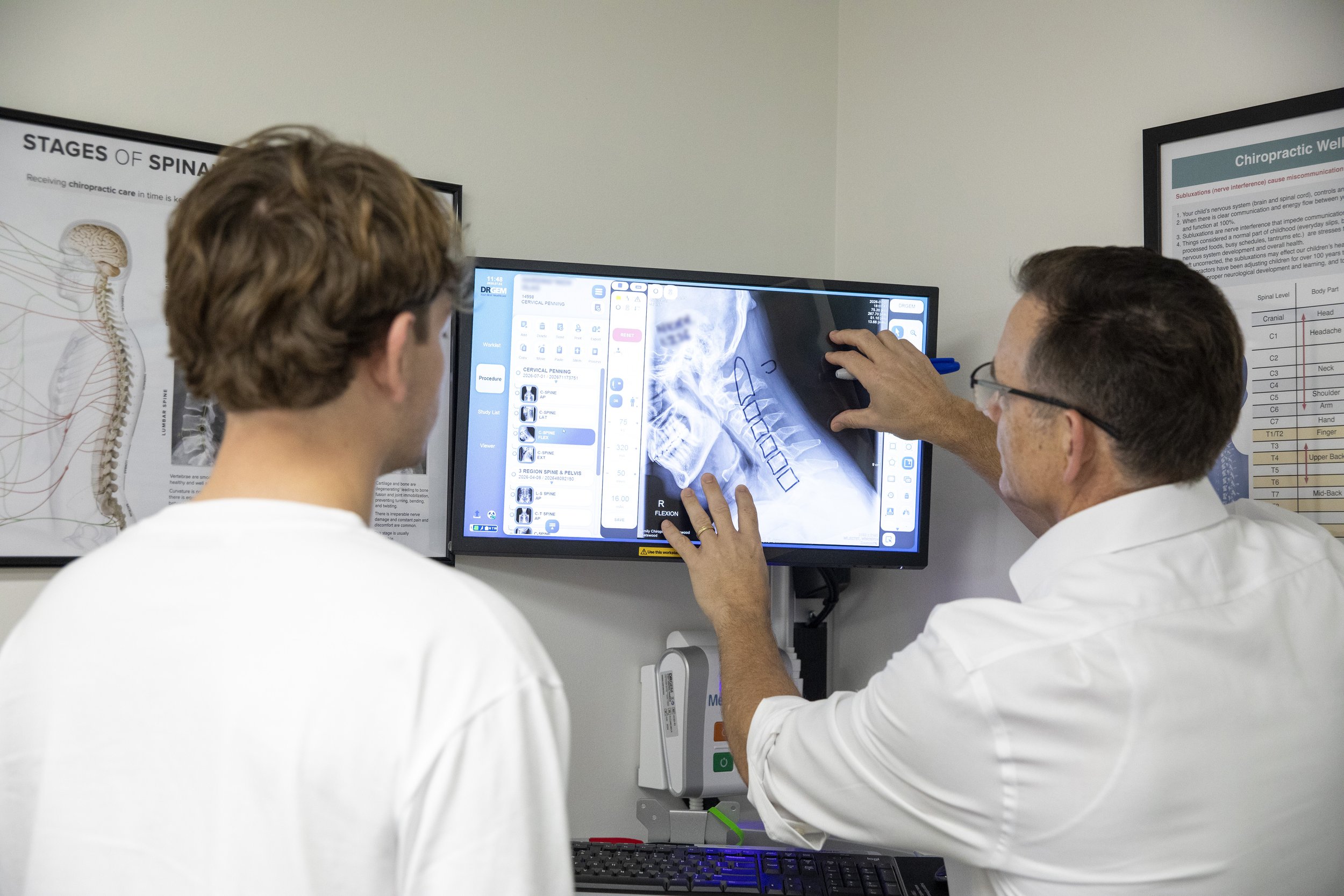
Lets get to your body’s inability to cope with the amount of stress that you are faced with. After all, you should be able to cope with stress. However, if your body’s ability to cope is lower than the amount of accumulated stress, your body will become ‘sympathetic dominant’. This will run the stress cycle/ cascade within you body. Tight shoulders are a give away sign, and the tip of the iceberg, that your body is not coping. A chiropractic assessment will look at you as a whole. Your neck, upper back, shoulder movement, muscle function and neurological signs, alongside workload, sleep and stress — the connected picture our Three-Legged Stool approach (Alignment, Activation, Awareness) is built around.
Chiropractic care works wonders. It will help to introduce movement to joints that have become locked up, will help to break down scar tissue - rebuilding and nourishing surrounding soft tissues, and your sympathetic (fight or flight) and parasympathetic (vagus nerve/ rest, digest and repair) nervous systems will start to rebalance. It is usually one part of a broader plan.
Our role at Family Chiropractic Chatswood is to help identify what's relevant to you, explain plainly what is and isn't clear, provide care within scope, and help you to achieve your health goals
"Think well" is not "just think positive"
In our Eat Well • Move Well • Think Well approach, "think well" means giving your brain and body better conditions to work with: realistic workloads, recovery, boundaries, social connection, breathing or mindfulness practices that actually suit you, and professional mental-health care when it's needed.
You're not failing because your shoulders feel tight. You may simply need a plan that acknowledges the full picture — which is exactly what an assessment is for.
If you're tired of feeling like you're falling apart in pieces, you're welcome to arrange a complimentary initial consultation at Family Chiropractic Chatswood — genuinely no charge if chiropractic isn't the right fit for you.
Get Better, Stay Well, Feel Alive.
Frequently asked questions
What is "falling apart syndrome"? It's a patient term, not a diagnosis — the feeling of being tight and sore everywhere at once, often driven by the overlap between stress, poor sleep, workload and muscle guarding rather than several unrelated problems.
Can stress cause shoulder pain? Stress may contribute to muscle tension, reduced sleep and increased pain sensitivity, but it should not be assumed to be the only cause.
Why are my shoulders always tight? Possible contributors include sustained posture, repetitive load, stress, sleep, training demands and local or referred pain. Persistent tightness deserves assessment.
Can chiropractic care reduce stress? Chiropractic care and making lifestyle changes congruent with your genetic makeup can help with your body’s resilience to stress. Therefore, the chirorpactic adjustment, as powerful as it is is not a panacea. Lifestyle changes and appropriate professional support may also be important.
Is shoulder pain all in my head? No. Pain is real. Psychological and social factors can influence pain without making it imaginary.