
What is MY Perfect Posture?
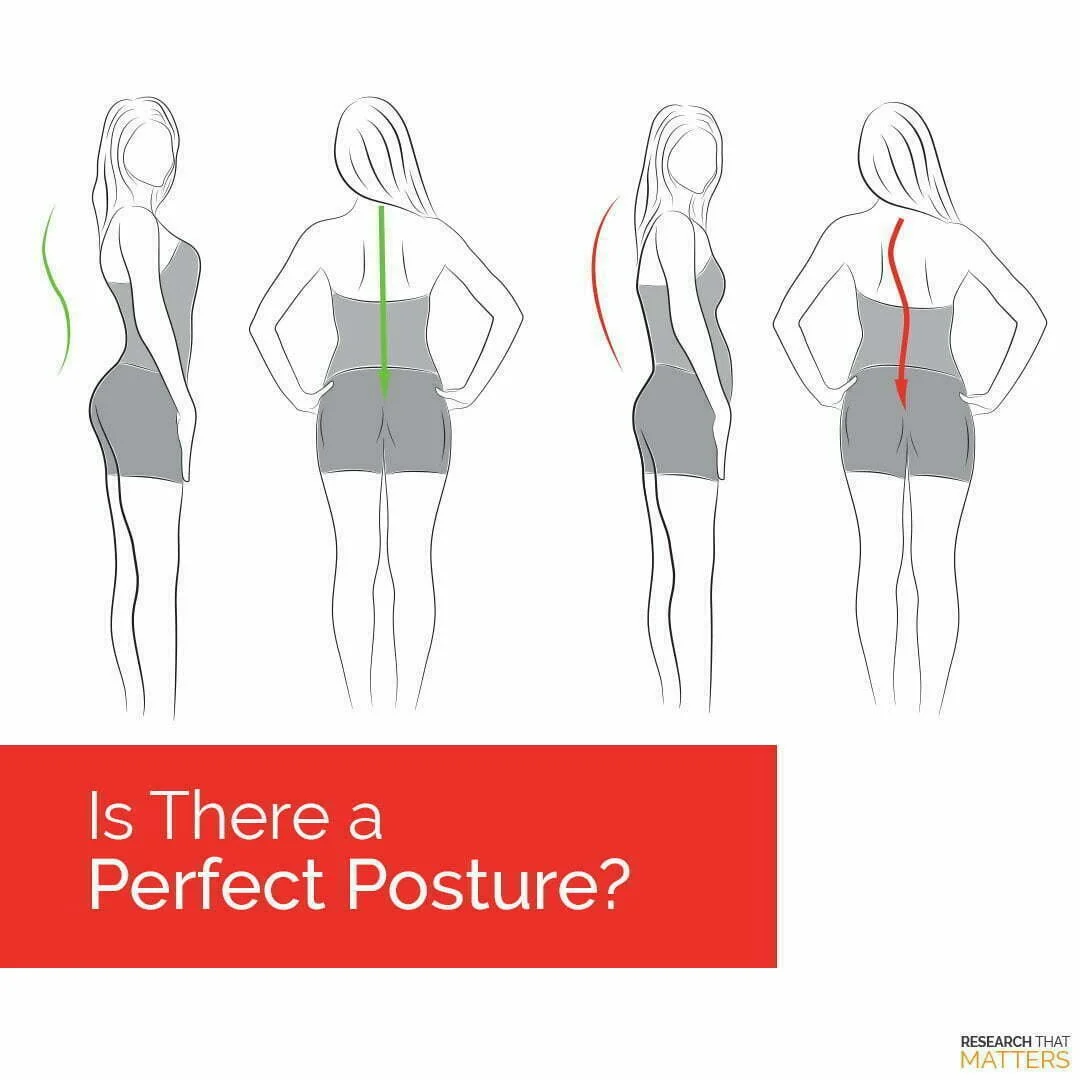
"Sit up straight and stop slouching!" You've likelyheard this since childhood, but is there such a thing as perfect posture? Theanswer is a bit complicated. The latest research shows that it may be moreimportant to think about a "balanced" or "dynamic" posturethan perfect posture, and we're also discovering that our ability to changepositions and move may be more critical than our static position while standingor sitting.

Your posture is made up of a dynamic pattern of responses,reflexes, and habits, not a single position. Gravity, your work environment,and your anatomy all play a role. For instance, sitting for hours on endstaring at a computer screen is a perfect example of an imbalanced andchallenged posture as a result of ergonomics. Over time, this imbalance canlead to forward head posture, which can cause pain and even degenerativechanges in your joints. Forward head posture affects millions of people whospend their days using computers. It places stress on the neck and shouldersand weakens the supporting muscles.
- Forward headposture affects millions and results in neck pain for up to 75% of people.
- Neck pain,tension, stiffness, and tenderness are all signs of chronic forward headposture.
- Trapeziusstrengthening has been shown to provide clinically significant relief for thosestruggling with neck pain as a result of forward head posture.
Strength and flexibility play a significant role in your posture. Having good core strength and balancing that strength with flexibility can help you dynamically adapt to your environment. While "perfect" posture may not exist, each one of us has an opportunity to improve our strength, flexibility, and ergonomics to reduce our likelihood of experiencing pain. If you spend your days looking at a computer, let us know. We'll be happy to recommend a care plan to help you balance the effects of all that screen time.
Family Chiropractic Chatswood: your partner in achieving optimal spinal health and overall wellbeing.
Science Source(s):
Effects of Lower Trapezius Strengthening Exercises on Pain,Dysfunction, Posture Alignment, Muscle Thickness, and Contraction Rate inPatients with Neck Pain; Randomized Controlled Trial. Medical Science Monitor2020